
Product Description
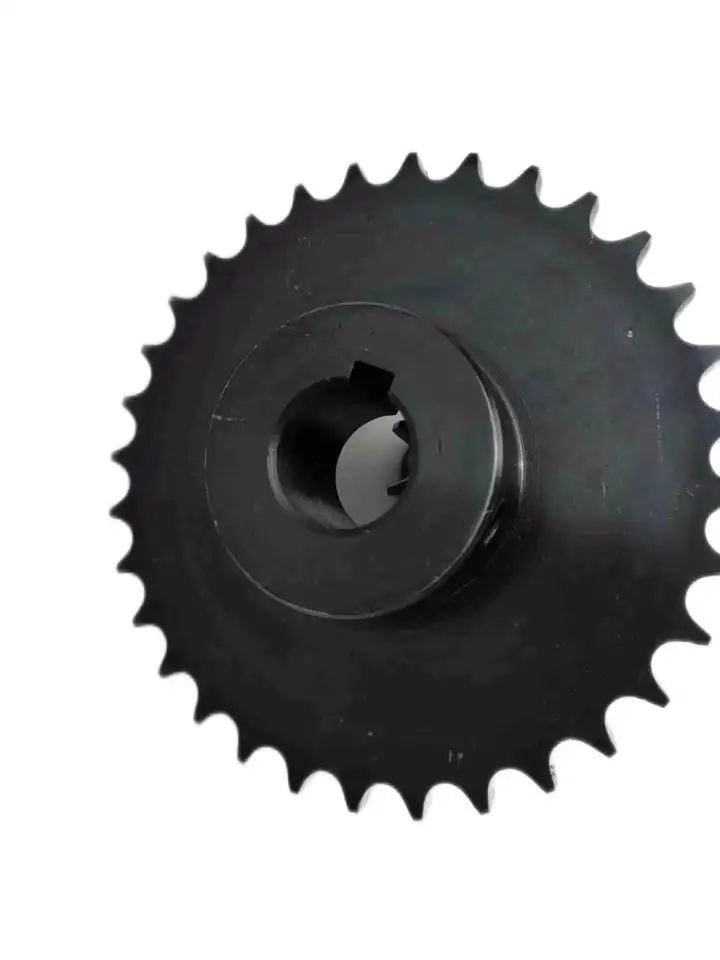
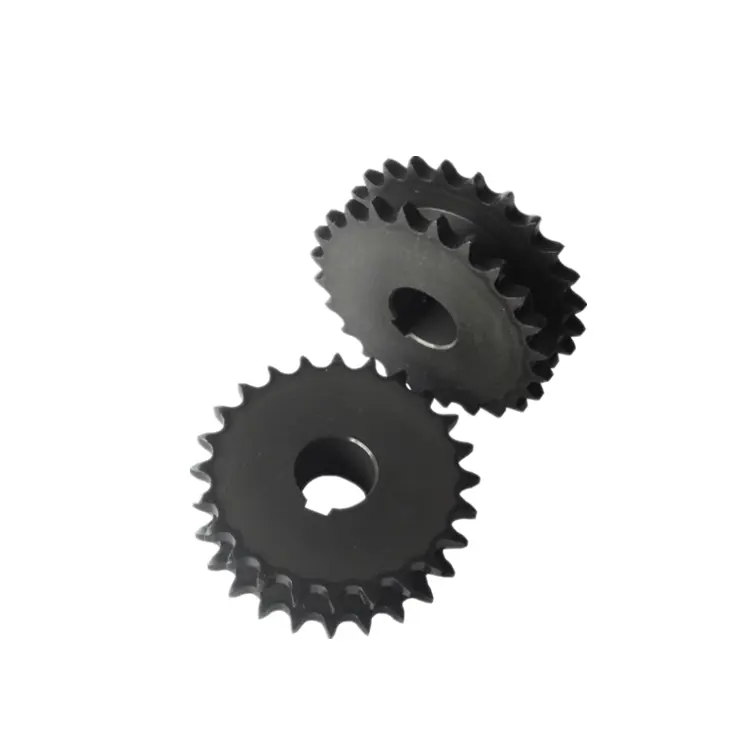
China ISO Standard Excavator Roller Chain Sprocket with Hubs Sprocket Gear
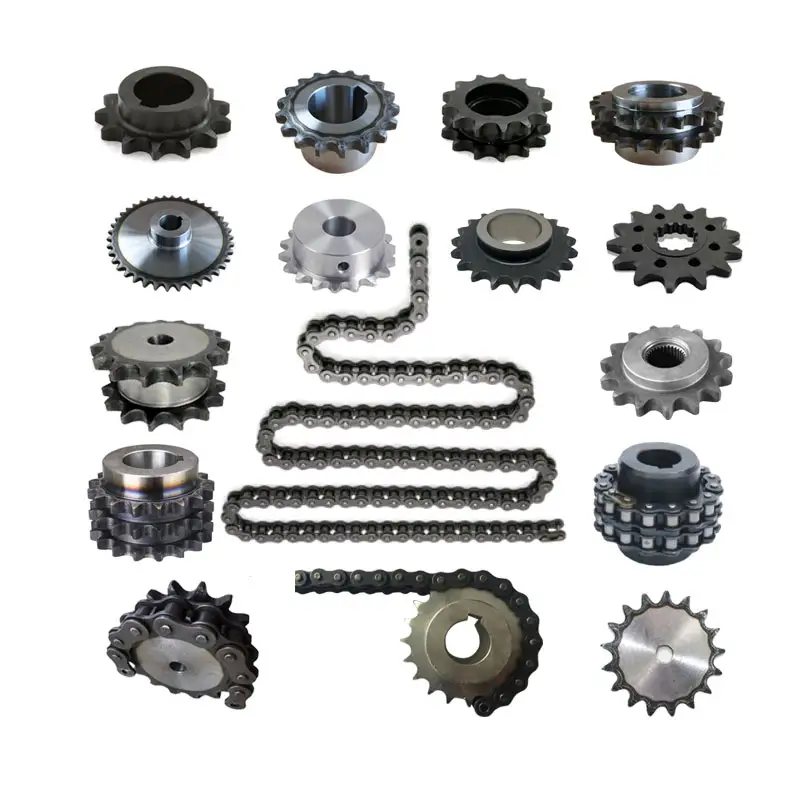
XIHU (WEST LAKE) DIS.HUA Chain Group is the most professional manufacturer of power transmission in China, manufacturing roller chains, industry sprockets, motorcycle sprockets, casting sprockets, different type of couplings, pulleys, taper bushes, locking devices, gears, shafts, CNC precision parts and so on. We have passed ISO9001, ISO14001, TS16949 such quality and enviroment certification.
Product Name: Industry Sprocket
Standard: ANSI, DIN, JIS, KANA
Material: Steel C45
Surface Treatment: Teeth Harden, chemical black finish
Hardness: 40-52 HRC
OEM: Yes
Place of Origin: China
Application:
Industry sprockets can be usedin power driving, conveyor, lifting, mine, agricultural, food industry etc., together with roller chains.
| Product name | ISO Standard srpockets Chainwheels with hubs |
| Materials Available | 1. Stainless Steel: SS201, SS303, SS304, SS316, SS416, SS420 |
| 2. Steel:C45(K1045), C46(K1046),C20 | |
| 3. Brass:C36000 ( C26800), C37700 ( HPb59), C38500( HPb58), C27200(CuZn37), C28000(CuZn40) | |
| 4. Bronze: C51000, C52100, C54400, etc | |
| 5. Iron: 1213, 12L14,1215 | |
| 6. Aluminum: Al6061, Al6063 | |
| 7.OEM according to your request | |
| Surface Treatment | Annealing, natural anodization, heat treatment, polishing, nickel plating, chrome plating, znic plating,yellow passivation, gold passivation, satin, Black surface painted etc. |
| Products Available | sprockt chains, pulley, shafts(axles, spline shafts, dart shafts),gears (pinions, wheels gear rack) bearing, bearing seat, bushing, coupling, lock assembly etc. |
| Processing Method | CNC machining, punch,turning, milling, drilling, grinding, broaching, welding and assembly |
| QC : | Technicians self-check in production,final-check before package by professional Quality inspector |
| Size | Drawings |
| Package | Wooden Case/Container and pallet, or as per customized specifications |
| Certificate | ISO9001:2008 , ISO14001:2001,ISO/TS 16949:2009 |
| Advantage | Quality first Service superior , Advanced equipment,Experienced workers,Perfect testing equipment |
| Lead Time | 15-25days samples. 30-45days offcial order |
FAQ:
1. Are you manufacturer or trade Company?
We are a factory founded in 1991 with trade team for international service.
2. What terms of payment you usually use?
T/T 30% deposit and 70% against document, Western Union, L/C at sight
3. what is your lead time for your goods?
Normally 45 days after confirmed order. 30 days could be available in low season for some items (during May to July), and 65 days during new year and hot season ( Jan to March).
4. Do you attend any Show?
We attend Hannover show in Germany, NMW in Austrilia, Canton fair, PTC, in China and many other special furniture shows.
| Standard Or Nonstandard: | Nonstandard |
|---|---|
| Application: | Motor, Electric Cars, Motorcycle, Machinery, Marine, Toy, Agricultural Machinery |
| Hardness: | Hardened Tooth Surface |
| Manufacturing Method: | Rolling Gear |
| Toothed Portion Shape: | Spur Gear |
| Material: | Carbon Steel |
| Customization: |
Available
| Customized Request |
|---|
Calculating Torque Requirements for a wheel sprocket Assembly
Calculating the torque requirements for a wheel sprocket assembly involves considering various factors that contribute to the torque load. The torque requirement is crucial for selecting the appropriate motor or power source to drive the system effectively. Here’s a step-by-step guide:
- 1. Determine the Load Torque: Identify the torque required to overcome the resistance or load in the system. This includes the torque needed to move the load, overcome friction, and accelerate the load if applicable.
- 2. Identify the Sprocket Radius: Measure the radius of the sprocket (distance from the center of the sprocket to the point of contact with the chain or belt).
- 3. Calculate the Tension in the Chain or Belt: If using a chain or belt drive, calculate the tension in the chain or belt. Tension affects the torque required for power transmission.
- 4. Account for Efficiency Losses: Consider the efficiency of the system. Not all the input power will be converted into output power due to friction and other losses. Account for this efficiency in your calculations.
- 5. Use the Torque Equation: The torque (T) can be calculated using the following equation:
T = (Load Torque × Sprocket Radius) ÷ (Efficiency × Tension)
It’s essential to use consistent units of measurement (e.g., Newton meters or foot-pounds) for all values in the equation.
Remember that real-world conditions may vary, and it’s advisable to add a safety factor to your calculated torque requirements to ensure the system can handle unexpected peak loads or variations in operating conditions.
Noise and Vibration in wheel sprocket Configurations
In a wheel sprocket configuration, noise and vibration levels can vary depending on several factors:
- Quality of Components: The quality of the wheel sprocket components can significantly impact noise and vibration. Well-manufactured and precisely engineered components tend to produce less noise and vibration.
- Lubrication: Proper lubrication of the sprocket teeth and chain or belt can reduce friction, which in turn helps minimize noise and vibration.
- Alignment: Correct alignment between the wheel sprocket is crucial. Misalignment can lead to increased noise and vibration as the components may not mesh smoothly.
- Tension: Maintaining the appropriate tension in the chain or belt is essential. Insufficient tension can cause the chain to slap against the sprocket teeth, resulting in noise and vibration.
- Speed and Load: Higher speeds and heavier loads can lead to increased noise and vibration levels in the system.
- Wear and Damage: Worn-out or damaged components can create irregularities in motion, leading to increased noise and vibration.
To reduce noise and vibration in a wheel sprocket setup:
- Use high-quality components from reputable suppliers.
- Ensure proper lubrication with appropriate lubricants.
- Regularly inspect and maintain the system to detect any misalignment, wear, or damage.
- Follow manufacturer guidelines for chain or belt tensioning.
- Consider using vibration-damping materials or mounting methods if necessary.
Minimizing noise and vibration not only improves the comfort and safety of the machinery but also extends the life of the components by reducing wear and fatigue.
Eco-Friendly Materials for Manufacturing Wheels and Sprockets
Yes, there are eco-friendly materials used for manufacturing wheels and sprockets. As industries strive to reduce their environmental impact and promote sustainability, manufacturers are exploring alternative materials that are more environmentally friendly. Some of the eco-friendly materials used for manufacturing wheels and sprockets include:
1. Recycled Materials:
Using recycled materials, such as recycled plastic or metal, can significantly reduce the demand for virgin raw materials and lower the overall carbon footprint. These materials are obtained from post-consumer or post-industrial waste and processed to create new products, reducing the need for new resource extraction.
2. Biodegradable Materials:
Biodegradable plastics, such as PLA (polylactic acid) and PHA (polyhydroxyalkanoates), are derived from renewable plant sources and can break down naturally in the environment. These materials are gaining popularity for applications where disposal or end-of-life considerations are critical.
3. Sustainable Composites:
Manufacturers are developing sustainable composite materials that combine renewable fibers, such as bamboo, hemp, or flax, with biodegradable resins. These composites offer good strength and rigidity while being more environmentally friendly compared to traditional fiber-reinforced plastics.
4. Natural Materials:
In some cases, natural materials like wood or bamboo are used to create sprockets and wheels for specific applications. These materials are renewable and biodegradable, making them a more sustainable choice.
5. Low-Toxicity Materials:
Some eco-friendly materials focus on reducing the use of harmful chemicals during manufacturing. Low-toxicity materials are not only better for the environment but also for the health and safety of workers involved in the production process.
When selecting eco-friendly materials for wheels and sprockets, it’s essential to consider factors such as the specific application, load-bearing requirements, and the material’s end-of-life characteristics. Manufacturers and users can contribute to environmental sustainability by opting for these eco-friendly alternatives in their machinery and equipment.


editor by CX 2023-10-21