
Product Description
|
Business type |
Manufacturer & Exporter |
||
|
Main export market |
Europe, North and South America, Southeast Asia, Oceania, Middle East, Africa |
||
|
Material |
Alloy Steel, Carbon Steel, Stainless Steel,Aluminum, Copper, Brass |
||
|
Manufacturing method |
Forged and then machined, hobbed, if need can also weld |
||
|
Heat treatment |
Hardening and Tempering, High Frequency Quenching, Carburizing Quenching |
||
|
Surface treatment |
Oxide black, Galvanized, Nickel plated, Chrome plated,Painted and so on |
||
|
Model |
ANSI: 25/35/41/40/50/60/80/100/120/140/160/180/200/240 |
||
|
DIN/ISO:04C/06C/085/08A/10A/12A/16A/20A/24A/28A/32A/36A/40A/48A |
|||
|
DIN/ISO:04B/05B/06B/08B/10B/12B/16B/20B/24B/28B/32B/36B/40B/48B |
|||
|
Process |
Forging, Hobbing, Precision machining |
||
|
Teeth |
8T-100T |
||
|
Type |
Type A sprockets :Plate (without Hub) |
||
|
Type B sprockets:One side with hub |
|||
|
Type C sprockets: Double side with hub |
|||
|
Finished bore sprockets:With the inner hole ,keyway and screw |
|||
1.Fast delivery: Standard products can be delivered in as fast as 20 days
2.Good service: timely reply, prompt quotation, responsible for the product
3.High cost performance: can maintain price stability for a certain period of time, bringing greater profits to customers
4.Good quality: production and testing have corresponding supervision to ensure product quality and get high praise from customers
5.OEM service: products can be customized according to drawings and requirements
We are responsible for the ordered products. We are very confident in the products we produce. Of course, if you have any problems after receiving the goods, you can contact us directly. We will confirm and negotiate in time to solve your difficulties.
| Standard Or Nonstandard: | Standard |
|---|---|
| Application: | Motor, Motorcycle, Machinery, Agricultural Machinery |
| Hardness: | Hardened Tooth Surface |
| Manufacturing Method: | Smithing |
| Toothed Portion Shape: | Harden Tooth |
| Material: | Steel, C45 Steel,A3 Steel,Stainless Steel,40cr |
| Samples: |
US$ 35/kg
1 kg(Min.Order) | |
|---|
| Customization: |
Available
| Customized Request |
|---|
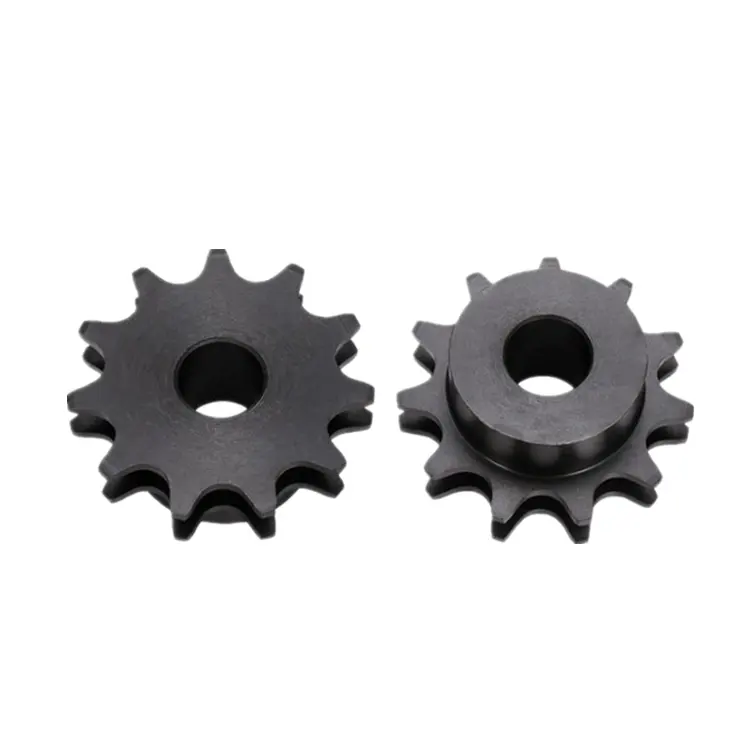
wheel sprocket System in Heavy Machinery and Industrial Equipment
Yes, a wheel sprocket system is commonly used in heavy machinery and industrial equipment for power transmission and motion control. The wheel sprocket configuration is a versatile and efficient method of transmitting rotational force between two shafts.
In heavy machinery and industrial equipment, the wheel is typically attached to one shaft, while the sprocket is mounted on another shaft. A chain or a toothed belt is wrapped around the wheel sprocket, connecting them. When the wheel is rotated, the chain or belt engages with the sprocket, causing the sprocket and the connected shaft to rotate as well. This mechanism allows the transfer of power from one shaft to the other, enabling various components and parts of the machinery to function.
Common applications of the wheel sprocket system in heavy machinery include:
- Construction Machinery: Wheel loaders, excavators, cranes, and other construction equipment often use wheel sprocket systems for efficient power transmission in various moving parts.
- Material Handling Equipment: Forklifts, conveyor systems, and other material handling equipment utilize wheel sprocket configurations to move goods and materials smoothly and reliably.
- Mining Equipment: Mining machinery, such as drilling rigs and conveyors, often incorporate wheel sprocket assemblies for power transmission in challenging environments.
- Agricultural Machinery: Tractors, combines, and other agricultural equipment use wheel sprocket systems to drive various components like wheels and harvesting mechanisms.
- Industrial Robotics: Robots and automated systems in manufacturing often utilize wheel sprocket setups for precise motion control and efficient power transmission.
One of the key advantages of the wheel sprocket system is its ability to handle heavy loads and transmit power over long distances. It is a reliable and cost-effective method of power transmission in various industrial settings. However, proper maintenance and alignment are crucial to ensuring the system’s optimal performance and longevity.
Overall, the wheel sprocket system is a widely used and effective power transmission solution in heavy machinery and industrial equipment, offering versatility and efficiency in a range of applications.
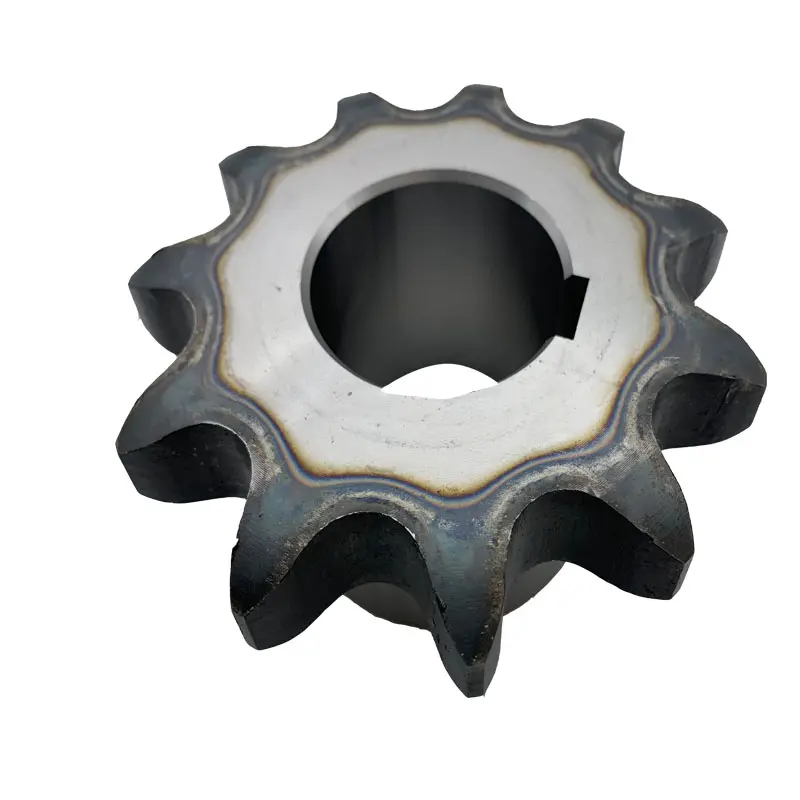
Load-Carrying Capacities of wheel sprocket Combinations
The load-carrying capacity of a wheel sprocket assembly depends on various factors, including the material, size, and design of both the wheel sprocket. Here are some common types of wheel sprocket combinations and their load-carrying capacities:
- Steel Wheel with Steel Sprocket: This combination offers high load-carrying capacity and is commonly used in heavy-duty applications. Steel wheels can handle substantial loads, and when paired with steel sprockets, the assembly can withstand even higher forces.
- Nylon Wheel with Steel Sprocket: Nylon wheels are known for their lightweight and durable nature. When combined with steel sprockets, they provide a good load-carrying capacity while reducing the overall weight of the assembly.
- Polyurethane Wheel with Steel Sprocket: Polyurethane wheels offer excellent wear resistance and are suitable for medium to heavy loads. When paired with steel sprockets, this combination can handle moderate to high load capacities.
- Rubber Wheel with Cast Iron Sprocket: Rubber wheels are known for their shock-absorbing properties and are often used in applications requiring vibration dampening. When used with cast iron sprockets, this combination can handle medium loads.
- Plastic Wheel with Plastic Sprocket: This combination is suitable for light-duty applications where lower loads are expected. Plastic wheels and sprockets are often used in applications that require low friction and quiet operation.
- Custom wheel sprocket Combinations: In some cases, custom wheel sprocket combinations are designed to meet specific load-carrying requirements. These combinations can be tailored to suit the application’s unique demands.
It’s important to note that load-carrying capacities also depend on other factors, such as the type of bearing used in the wheel, the shaft material, and the overall design of the mechanical system. Engineers should carefully consider the intended application, operating conditions, and safety factors when selecting the appropriate wheel sprocket combination to ensure optimal performance and longevity of the system.
Common Applications of Wheels and Sprockets in Machinery
Wheels and sprockets are crucial components used in various machinery and mechanical systems for power transmission, motion control, and mechanical advantage. Some common applications include:
1. Vehicles:
Wheels and sprockets are extensively used in vehicles, including automobiles, motorcycles, bicycles, and even heavy-duty trucks and construction equipment. Sprockets and chains are commonly found in motorcycles and bicycles for power transmission from the engine or pedals to the wheels.
2. Industrial Machinery:
In industrial settings, wheels and sprockets play a vital role in conveyor systems, where they are used to move materials or products along a production line. Sprockets are also employed in various machinery to transfer rotational motion and power between components.
3. Agricultural Equipment:
Agricultural machinery often relies on wheels and sprockets for functions such as driving tractors, operating harvesting equipment, and propelling irrigation systems.
4. Robotics:
Wheels and sprockets are commonly used in robotic systems to provide mobility and movement capabilities. Sprockets and chains or belts are used in robotic arms and joints to facilitate precise and controlled motion.
5. Material Handling:
Conveyor systems in warehouses and distribution centers utilize wheels and sprockets to move packages, products, and materials efficiently. The sprockets engage with conveyor chains to create a continuous loop for material transport.
6. Mining and Construction:
In heavy industries like mining and construction, large machinery such as excavators, bulldozers, and cranes utilize wheels and sprockets for propulsion and movement. Tracks with sprockets are commonly used in these applications for enhanced traction and stability.
7. Factory Automation:
In automated manufacturing processes, wheels and sprockets are employed in robotic arms and assembly line systems to control movement and manipulate objects with precision.
8. Renewable Energy:
In wind turbines, wheels and sprockets are used to convert the rotational motion of the blades into electrical energy by driving the generator.
These are just a few examples of the diverse applications of wheels and sprockets in machinery and mechanical systems. Their versatility, efficiency, and ability to provide mechanical advantage make them essential components in various industries.


editor by CX 2023-10-05