
Product Description
Company Profile
HangZhou Xihu (West Lake) Dis. Mechanical Transmission Parts Co., Ltd. is a professional manufacturer of mechanical transmission parts, founded in 1987. Our company is committed to standard roller sprocket, single row and multi-row sprocket, non-standard sprocket, gear, rack, bevel gear, sprocket, shaft, gear shaft and other products. We have passed ISO 9001 .Xihu (West Lake) Dis. company has a number of experienced engineers, involved in plHangZhou, testing, heat treatment, inspection, the use of strict and accurate testing methods. Our sprockets are widely used in agricultural machinery, stereoscopic garage, mining equipment, woodworking machinery, petroleum machinery and other industries. Implementation standards such as ANSI.BS, DIN.KANA, etc., can also be customized according to the drawing processing
Our products have won wide praise and trust from customers for their excellent quality. HangZhou Xihu (West Lake) Dis. mechanical transmission Parts Co., Ltd. adhere to the quality of survival, innovation and development, customer first business philosophy, dedicated to domestic and foreign customers service. We warmly welcome you to negotiate business with us.
Product Description
| Standard or Nonstandard | Standard | Application | Maqchinery | |
| Hardness | Hardened Tooth Surface | Material | C45 | |
| Specification | Various Sprockets | Pitch(PCD) | 1-10M | |
| Toothed Portion Shape | Spur Gear | Teeth | 10-60Z | |
| HS Code | 84839000 | Production Capacity | 100000 Pcs/Year |
Detailed Photos
Certifications
FAQ
1. Are you manufacturer or trade company ?
We are a manufacturing factory founded in 1987 ,with trade team for international service.
2. What terms of payment you usually use ?
T/T . 30% deposit ,and 70% before finish production .Price :FOB ZheJiang .
3. Can you make products according to customer”s design ?
Yes , we can make according to customer”s drawing and samples .OED and ODM are acceptable.
4.How long is your delivery time ?
Genarally it is 5-15 days afte rthe deposit .It will take more days customized.
5. What do I need for offering a quote ?
Please offer us 2D or 3d drawing (with material ,dimension,surface treatment and other technical datas etc.), quantity ,or samples .
Then we will quote the best price .
| Application: | Machinery, Marine, Toy, Agricultural Machinery |
|---|---|
| Hardness: | Hardened Tooth Surface |
| Manufacturing Method: | Cast Gear |
| Samples: |
US$ 0.1/Piece
1 Piece(Min.Order) | Order Sample |
|---|
| Customization: |
Available
| Customized Request |
|---|
.shipping-cost-tm .tm-status-off{background: none;padding:0;color: #1470cc}
|
Shipping Cost:
Estimated freight per unit. |
about shipping cost and estimated delivery time. |
|---|
| Payment Method: |
|
|---|---|
|
Initial Payment Full Payment |
| Currency: | US$ |
|---|
| Return&refunds: | You can apply for a refund up to 30 days after receipt of the products. |
|---|
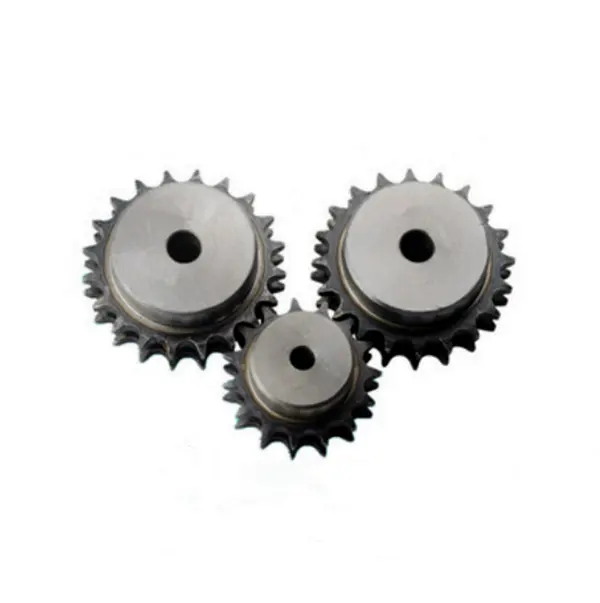
Ensuring Proper Alignment between a Wheel and its Corresponding Sprocket
Proper alignment between a wheel and its corresponding sprocket is crucial for the smooth and efficient operation of the wheel sprocket system. Misalignment can lead to increased wear, noise, and reduced performance. Here are some steps to ensure proper alignment:
- Use Precision Components: Ensure that both the wheel sprocket are high-quality, precision-manufactured components that meet the required specifications. Using well-machined components will aid in achieving better alignment.
- Check Axle Alignment: Make sure the axle or shaft on which the wheel sprocket are mounted is straight and properly aligned. Any misalignment in the axle can lead to misalignment of the wheel sprocket.
- Proper Mounting: Ensure that the wheel sprocket are securely and correctly mounted on the axle or shaft. Use appropriate fasteners and tightening techniques to prevent any movement or shifting during operation.
- Check for Parallelism: The axes of the wheel sprocket should be parallel to each other. Measure the distance between the axes at multiple points to verify parallel alignment.
- Use Alignment Tools: Alignment tools, such as laser alignment systems, can be employed to accurately align the wheel sprocket. These tools can help identify and correct misalignments effectively.
- Check Tension and Tensioner Alignment: If a tensioner is used in the system, ensure that it is properly aligned and applying the right tension to the chain or belt. Incorrect tension can cause misalignment.
- Regular Maintenance: Implement a regular maintenance schedule to check and adjust alignment as needed. Regular inspections can help identify and address alignment issues before they cause significant problems.
- Monitor Performance: Keep an eye on the performance of the wheel sprocket system. Unusual noises, vibrations, or signs of wear can indicate misalignment and should be investigated promptly.
Proper alignment is essential for the long-term performance and reliability of the wheel sprocket system. By following these steps and conducting regular maintenance, you can ensure that the wheel sprocket work together harmoniously, providing efficient power transmission and minimizing wear and tear.
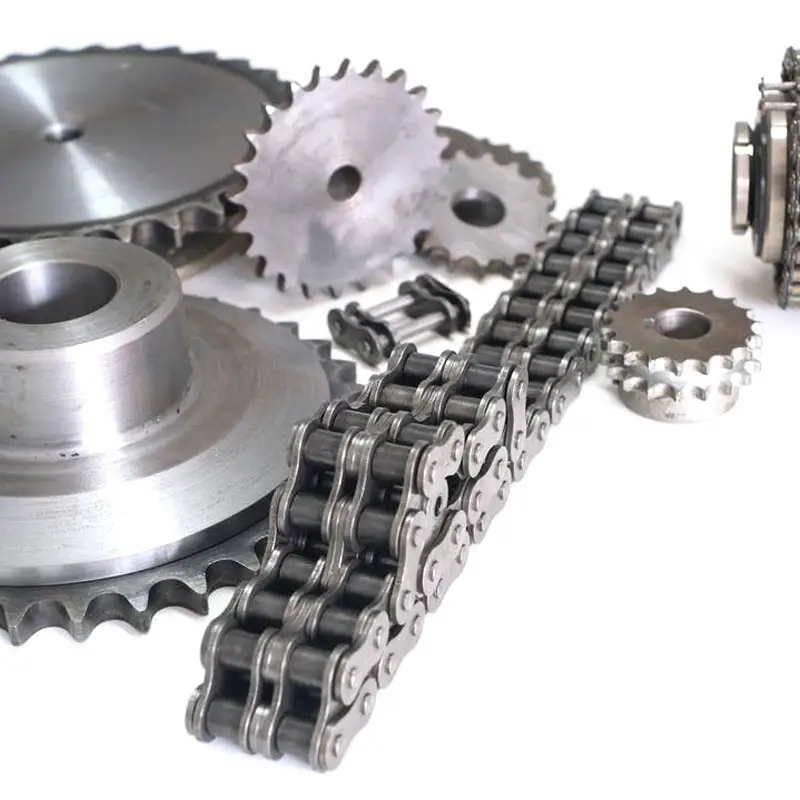
Using a Belt Sprocket in Place of a Chain Sprocket with a Wheel
Yes, in many cases, a belt sprocket can be used in place of a chain sprocket with a wheel, provided that the system is designed to accommodate the change.
Both chain sprockets and belt sprockets serve the same fundamental purpose of transferring rotational motion and power between the wheel and the driven component. However, there are some important considerations to keep in mind when replacing a chain sprocket with a belt sprocket:
- Alignment: Belt sprockets and chain sprockets must be aligned properly with the wheel to ensure smooth and efficient power transmission. Any misalignment can cause premature wear and reduce the system’s overall performance.
- Tension: Chain-driven systems require specific tension to prevent slack and maintain proper engagement between the sprockets and the chain. Belt-driven systems, on the other hand, require appropriate tension to prevent slippage. Ensuring the correct tension for the specific type of sprocket is crucial for reliable operation.
- Load Capacity: Consider the load capacity and torque requirements of the system when selecting a belt sprocket. Belt sprockets may have different load-carrying capabilities compared to chain sprockets, and using the wrong type can lead to premature wear or failure.
- Speed and RPM: Belt-driven systems may have different operating speeds and RPM limits compared to chain-driven systems. Ensure that the selected belt sprocket can handle the desired rotational speed without exceeding its design limitations.
- System Design: Changing from a chain-driven system to a belt-driven system (or vice versa) may require modifications to the overall system design, including the size of the sprockets and the layout of the system. Consult with an engineer or a qualified professional to ensure that the replacement is appropriate and safe.
Overall, replacing a chain sprocket with a belt sprocket can be a viable option in certain applications. However, it’s essential to consider the factors mentioned above and evaluate the compatibility of the new sprocket with the existing system to achieve optimal performance and longevity.
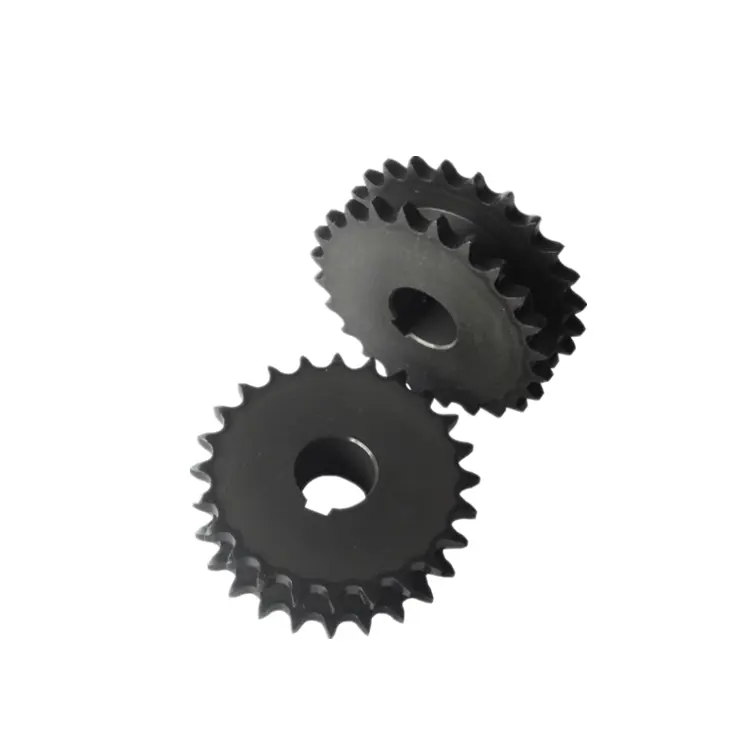
Eco-Friendly Materials for Manufacturing Wheels and Sprockets
Yes, there are eco-friendly materials used for manufacturing wheels and sprockets. As industries strive to reduce their environmental impact and promote sustainability, manufacturers are exploring alternative materials that are more environmentally friendly. Some of the eco-friendly materials used for manufacturing wheels and sprockets include:
1. Recycled Materials:
Using recycled materials, such as recycled plastic or metal, can significantly reduce the demand for virgin raw materials and lower the overall carbon footprint. These materials are obtained from post-consumer or post-industrial waste and processed to create new products, reducing the need for new resource extraction.
2. Biodegradable Materials:
Biodegradable plastics, such as PLA (polylactic acid) and PHA (polyhydroxyalkanoates), are derived from renewable plant sources and can break down naturally in the environment. These materials are gaining popularity for applications where disposal or end-of-life considerations are critical.
3. Sustainable Composites:
Manufacturers are developing sustainable composite materials that combine renewable fibers, such as bamboo, hemp, or flax, with biodegradable resins. These composites offer good strength and rigidity while being more environmentally friendly compared to traditional fiber-reinforced plastics.
4. Natural Materials:
In some cases, natural materials like wood or bamboo are used to create sprockets and wheels for specific applications. These materials are renewable and biodegradable, making them a more sustainable choice.
5. Low-Toxicity Materials:
Some eco-friendly materials focus on reducing the use of harmful chemicals during manufacturing. Low-toxicity materials are not only better for the environment but also for the health and safety of workers involved in the production process.
When selecting eco-friendly materials for wheels and sprockets, it’s essential to consider factors such as the specific application, load-bearing requirements, and the material’s end-of-life characteristics. Manufacturers and users can contribute to environmental sustainability by opting for these eco-friendly alternatives in their machinery and equipment.


editor by CX 2023-10-23