
Product Description
Chinese standard finished bore roller chain sprocket with heat treatment
With more than 20 years’ experience, high-precision equipment and strict management system, CZPT can provide sprockets, gears, shafts, flanges and related transmission parts for you with stable quality and best service.
Q1: What information will be highly appreciated for a quotation?
A: It will be preferred if you can offer us the drawings, heat treatment and surface treatment requirements, required quantity, quoted currency (USD or EUR), or samples.
Q2: Are you a trading company or factory?
A: CZPT is a factory located in HangZhou, ZheJiang .
Q3: What is your terms of payment?
A: T/T 50% in advance, and 50% before shipment. We’ll show you the photos of the products and packages before you pay the balance.
Q4: Do you test all your goods before delivery?
A: Yes, CZPT has adopted a strict quality management system and all the items will be inspected according to the inspection instruction with good inspection records.
Q5: Is there any customer that has assessed your quality management system?
A:Yes, CZPT has passed the audit of many customers, such as Mitsubishi, CLAAS, Kardex and so on.
Q6: How does your company ensure the quality of the raw material?
A: The steels are purchased from our domestic CZPT steel mills. After receiving the raw material, the steel will be inspected by spectrograph imported from Germany. Besides, the CZPT number of steel will be well-managed in our ERP system to ensure the traceablity of our products.
Q7: How do you ensure the high quality of products?
A: With integral manufacturing processes, a strict quality control system and imported machines, we can manufacture high quality products.
Q8: What are your terms of delivery?
A: EXW, FOB ZheJiang .
Q9: How about your lead time?
A: Normally it will take 45 days after receiving your advance payment. The specific lead time depends on the items and the quantity of your order.
/* January 22, 2571 19:08:37 */!function(){function s(e,r){var a,o={};try{e&&e.split(“,”).forEach(function(e,t){e&&(a=e.match(/(.*?):(.*)$/))&&1
| Standard Or Nonstandard: | Standard |
|---|---|
| Application: | Motor, Motorcycle, Machinery, Toy, Agricultural Machinery, Car |
| Hardness: | Hardened Tooth Surface |
| Manufacturing Method: | Forging Parts |
| Material: | Carbon Steel |
| Teeth: | 9t-120t |
| Samples: |
US$ 9.99/Piece
1 Piece(Min.Order) | |
|---|
| Customization: |
Available
| Customized Request |
|---|
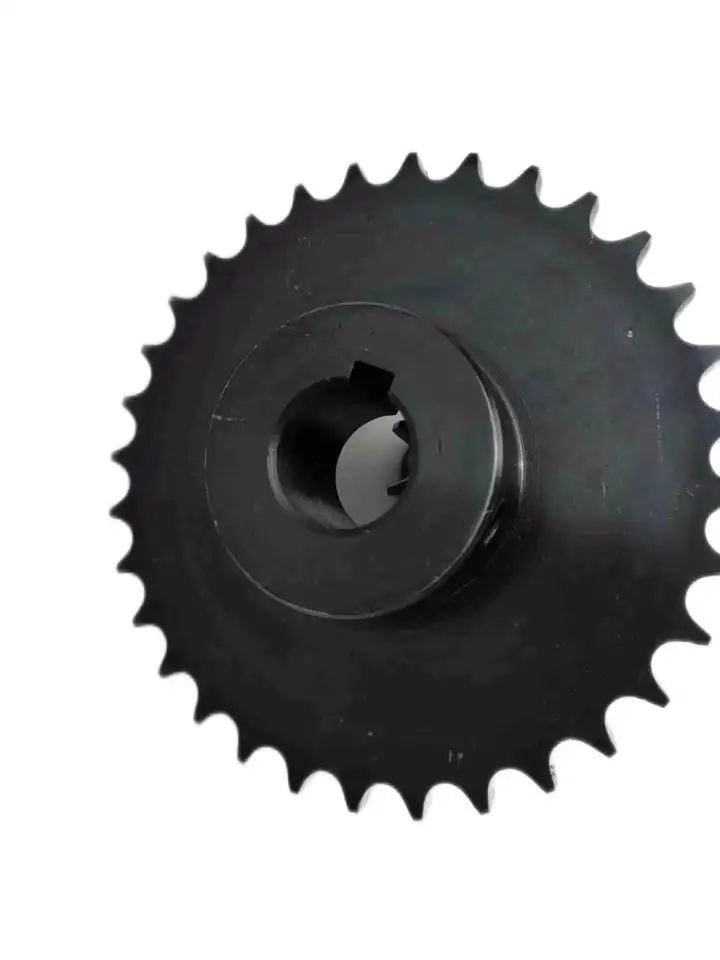
Calculating Torque Requirements for a wheel sprocket Assembly
Calculating the torque requirements for a wheel sprocket assembly involves considering various factors that contribute to the torque load. The torque requirement is crucial for selecting the appropriate motor or power source to drive the system effectively. Here’s a step-by-step guide:
- 1. Determine the Load Torque: Identify the torque required to overcome the resistance or load in the system. This includes the torque needed to move the load, overcome friction, and accelerate the load if applicable.
- 2. Identify the Sprocket Radius: Measure the radius of the sprocket (distance from the center of the sprocket to the point of contact with the chain or belt).
- 3. Calculate the Tension in the Chain or Belt: If using a chain or belt drive, calculate the tension in the chain or belt. Tension affects the torque required for power transmission.
- 4. Account for Efficiency Losses: Consider the efficiency of the system. Not all the input power will be converted into output power due to friction and other losses. Account for this efficiency in your calculations.
- 5. Use the Torque Equation: The torque (T) can be calculated using the following equation:
T = (Load Torque × Sprocket Radius) ÷ (Efficiency × Tension)
It’s essential to use consistent units of measurement (e.g., Newton meters or foot-pounds) for all values in the equation.
Remember that real-world conditions may vary, and it’s advisable to add a safety factor to your calculated torque requirements to ensure the system can handle unexpected peak loads or variations in operating conditions.
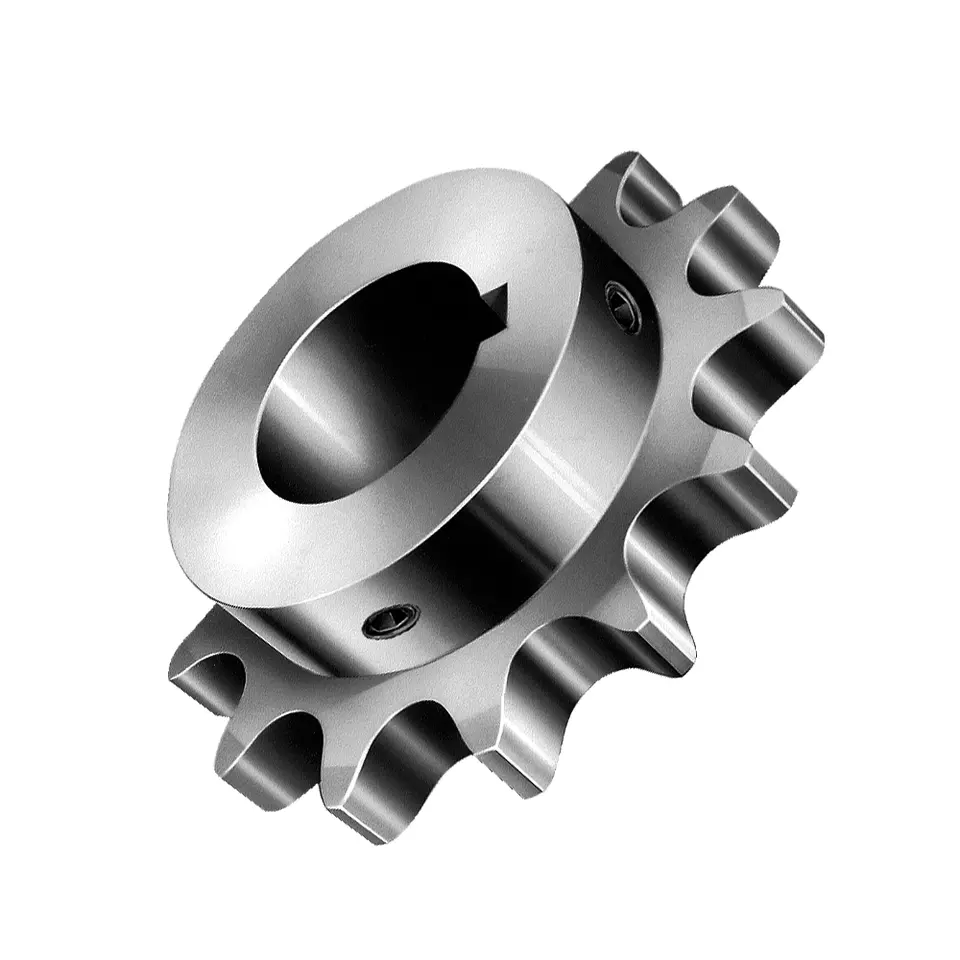
Choosing the Right Material for a Sprocket to Ensure Longevity
Choosing the right material for a sprocket is crucial to ensure its longevity and reliable performance in a given application. The material selection depends on various factors such as load, speed, operating environment, and budget. Here are some common materials used for sprockets and their considerations:
- Steel: Steel sprockets are widely used in a wide range of applications due to their excellent strength, durability, and wear resistance. They are suitable for heavy-duty and high-speed operations. Different grades of steel, such as carbon steel or alloy steel, offer varying levels of hardness and strength.
- Stainless Steel: Stainless steel sprockets are preferred when corrosion resistance is essential, making them suitable for applications where the sprocket is exposed to moisture, chemicals, or outdoor elements. They are commonly used in food processing, pharmaceutical, and marine industries.
- Cast Iron: Cast iron sprockets offer good wear resistance and are often used in low to medium-speed applications. They are cost-effective and provide excellent performance in less demanding conditions.
- Plastics: Plastic sprockets are lightweight and corrosion-resistant. They are commonly used in applications where low noise, self-lubrication, and resistance to chemicals or moisture are required. However, they have limited load-carrying capacity and may not be suitable for heavy-duty applications.
- Aluminum: Aluminum sprockets are lightweight and commonly used in applications where weight reduction is critical, such as aerospace and certain machinery. However, they are not as durable as steel sprockets and are not suitable for high loads or harsh environments.
When choosing the right material for a sprocket, consider the following:
- Load Capacity: Select a material that can handle the expected loads in the application without deforming or wearing excessively.
- Speed: Higher speeds may require materials with better heat dissipation and wear resistance.
- Environment: Consider factors such as moisture, chemicals, temperature, and outdoor exposure. Choose a material with suitable corrosion resistance and resilience to environmental conditions.
- Maintenance: Some materials may require more frequent maintenance or lubrication to ensure longevity.
- Cost: Balance the material’s performance with the budget constraints of the project.
It’s essential to consult with sprocket manufacturers or material experts to determine the most appropriate material for your specific application. They can provide valuable insights and recommendations based on your requirements, helping to ensure the longevity and optimal performance of the sprocket in your machinery or equipment.
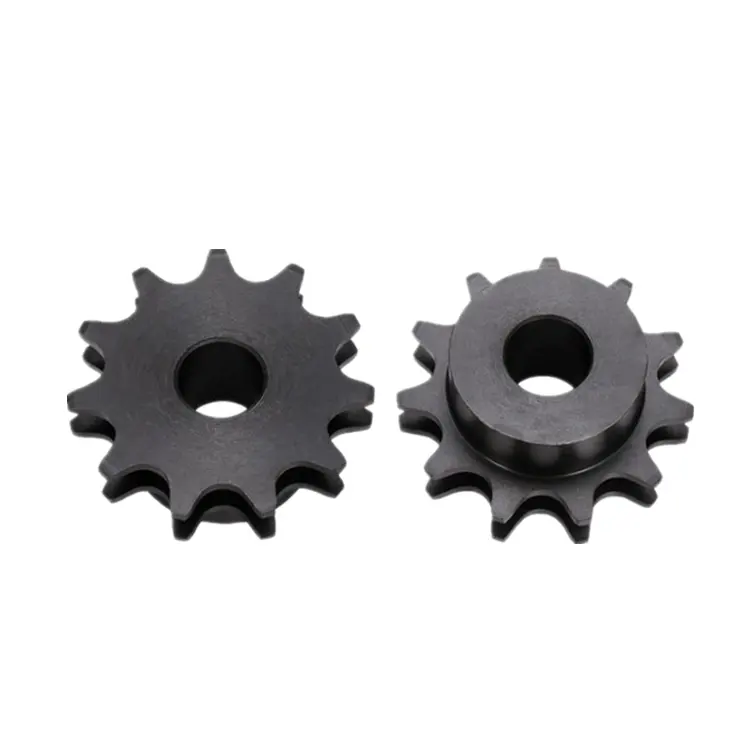
Common Applications of Wheels and Sprockets in Machinery
Wheels and sprockets are crucial components used in various machinery and mechanical systems for power transmission, motion control, and mechanical advantage. Some common applications include:
1. Vehicles:
Wheels and sprockets are extensively used in vehicles, including automobiles, motorcycles, bicycles, and even heavy-duty trucks and construction equipment. Sprockets and chains are commonly found in motorcycles and bicycles for power transmission from the engine or pedals to the wheels.
2. Industrial Machinery:
In industrial settings, wheels and sprockets play a vital role in conveyor systems, where they are used to move materials or products along a production line. Sprockets are also employed in various machinery to transfer rotational motion and power between components.
3. Agricultural Equipment:
Agricultural machinery often relies on wheels and sprockets for functions such as driving tractors, operating harvesting equipment, and propelling irrigation systems.
4. Robotics:
Wheels and sprockets are commonly used in robotic systems to provide mobility and movement capabilities. Sprockets and chains or belts are used in robotic arms and joints to facilitate precise and controlled motion.
5. Material Handling:
Conveyor systems in warehouses and distribution centers utilize wheels and sprockets to move packages, products, and materials efficiently. The sprockets engage with conveyor chains to create a continuous loop for material transport.
6. Mining and Construction:
In heavy industries like mining and construction, large machinery such as excavators, bulldozers, and cranes utilize wheels and sprockets for propulsion and movement. Tracks with sprockets are commonly used in these applications for enhanced traction and stability.
7. Factory Automation:
In automated manufacturing processes, wheels and sprockets are employed in robotic arms and assembly line systems to control movement and manipulate objects with precision.
8. Renewable Energy:
In wind turbines, wheels and sprockets are used to convert the rotational motion of the blades into electrical energy by driving the generator.
These are just a few examples of the diverse applications of wheels and sprockets in machinery and mechanical systems. Their versatility, efficiency, and ability to provide mechanical advantage make them essential components in various industries.


editor by CX 2024-04-10