
Product Description
1.Chain used
sprocketes are manufactured with a tooth profile and dimensional precision to bring out the maximum performance of the chain you will use.
2. Number of teeth
sprockets are available with small and large numbers of teeth to match your usage conditions.
|
Single pitch sprocket |
Double pitch sprocket |
||||
|
*Chain matched:35(06C) /06BTeeth:from 9-120 *Chain matched:40(08A) /08BTeeth:from 9-120 *Chain matched:50(10A) /10BTeeth:from 9-120 *Chain matched:60(12A) /12BTeeth:from 9-120 *Chain matched:80(16A) /16B Teeth:from 9-120 *Chain matched:100(20A)/20B Teeth:from 9-120 *Chain matched:120(24A) /24B Teeth:from 9-120 *Chain matched:140(28A) /28B Teeth:from 9-120 *Chain matched:160(32A) /32B Teeth:from 9-120 *Chain matched:200(40A) /40B Teeth:from 9-120 |
*P=25.4mm Teeth:from 7-100
*P=31.8mm Teeth:from 7-100
*P=38.1mm Teeth:from 7-100
*P=50.8mm Teeth:from 7-100
*P=63.5mm Teeth:from 7-100 |
3. Consturction
4. Material
Carbon Steel, Stainless Steel,Aluminum, Nylon, POM, Copper, Brass,42CrMo,40Cr,A3 and so on.
5. Bore
Pilot bore, finished bore, taper bore, bearing hole and special bore
6. Treatment
Heat Treatment: Hardening and Tempering, High Frequency Quenching, Carburizing Quenching and so on.
Surface Treatment: Zinc Plating, Chrome plated, Black oxide Treatment, Spray Paint, Mirror Finish, Sand-blasting and so on.
FAQ
1. Are you manufacturer or trade company ?
We are a manufacturing factory founded in 1987 ,with trade team for international service.
2. What terms of payment you usually use ?
T/T . 30% deposit ,and 70% before finish production .Price :FOB ZheJiang .
3. Can you make products according to customer”s design ?
Yes , we can make according to customer”s drawing and samples .OED and ODM are acceptable.
4.How long is your delivery time ?
Genarally it is 5-15 days afte rthe deposit .It will take more days customized.
5. What do I need for offering a quote ?
Please offer us 2D or 3D drawing (with material ,dimension,surface treatment and other technical datas etc.), quantity ,or samples .
Then we will quote the best price .
/* January 22, 2571 19:08:37 */!function(){function s(e,r){var a,o={};try{e&&e.split(“,”).forEach(function(e,t){e&&(a=e.match(/(.*?):(.*)$/))&&1
| Standard Or Nonstandard: | Standard |
|---|---|
| Application: | Electric Cars, Motorcycle, Machinery, Agricultural Machinery |
| Hardness: | Hardened Tooth Surface |
| Samples: |
US$ 0.1/Piece
1 Piece(Min.Order) | Order Sample |
|---|
| Customization: |
Available
| Customized Request |
|---|
.shipping-cost-tm .tm-status-off{background: none;padding:0;color: #1470cc}
|
Shipping Cost:
Estimated freight per unit. |
about shipping cost and estimated delivery time. |
|---|
| Payment Method: |
|
|---|---|
|
Initial Payment Full Payment |
| Currency: | US$ |
|---|
| Return&refunds: | You can apply for a refund up to 30 days after receipt of the products. |
|---|
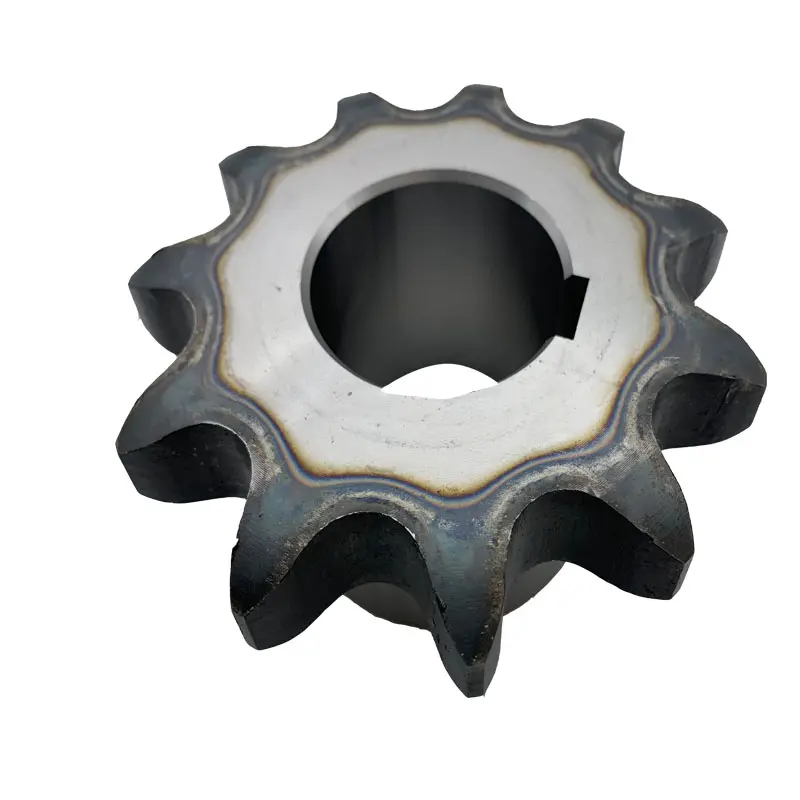
Alternatives to Chain Sprockets in wheel sprocket Configuration
While chain sprockets are commonly used in wheel sprocket configurations, there are alternative methods for power transmission in various applications:
- Gear and Gear Rack: Gears are toothed wheels that mesh with each other to transmit power. Instead of using a chain and sprocket, gears can directly engage with each other, offering a smooth and efficient power transfer. Gear racks, which are linear gears, can be used in place of wheels for linear motion applications.
- Belt and Pulley: Belts and pulleys offer a flexible and quiet means of power transmission. They work similarly to chain and sprocket systems but use belts instead of chains. Pulleys have grooves that grip the belt, allowing power to be transferred between the pulleys.
- Gear Train: A gear train consists of multiple gears meshed together to achieve specific speed and torque ratios. Gear trains are often used in complex machinery and mechanical systems where precise power transmission is required.
- Direct Drive: In some applications, direct drive mechanisms can be used, where the motor or power source is directly connected to the wheel or load without any intermediate components like sprockets or gears.
- Friction Drive: Friction drive systems use the friction between two surfaces to transfer power. One surface, such as a rubber wheel, is pressed against another surface to achieve power transmission.
The choice of alternative power transmission methods depends on various factors, including the application requirements, available space, speed, torque, and efficiency considerations. Each alternative method has its advantages and limitations, and the selection should be based on the specific needs of the mechanical system.
When considering alternatives to chain sprockets, it is essential to analyze the requirements of your application and consult with engineering experts or manufacturers to determine the most suitable method of power transmission for optimal performance and longevity.
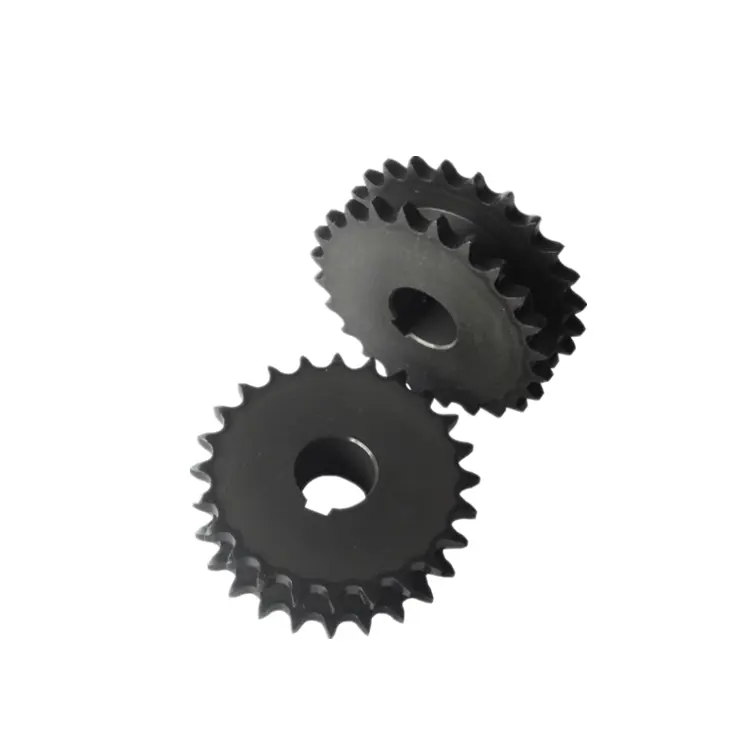
Vertical Power Transmission with wheel sprocket System
Yes, a wheel sprocket system can be used for vertical power transmission. In such cases, the system is designed to transmit power and motion between vertically aligned shafts. Vertical power transmission using a wheel sprocket assembly follows similar principles to horizontal transmission, but there are some factors to consider:
- Load and Torque: When transmitting power vertically, the weight of the load can significantly impact the torque requirements. The torque must be sufficient to lift the load against gravity while accounting for friction and other resistive forces.
- Sprocket Selection: Choosing the right sprocket is critical for vertical transmission. The sprocket teeth must be designed to engage the chain or belt effectively and prevent slipping, especially when lifting heavy loads.
- Lubrication: Proper lubrication is essential to reduce friction and wear in the system. Vertical applications may require specific lubricants to ensure smooth operation and prevent premature failure.
- Tensioning: Maintaining the correct tension in the chain or belt is crucial for vertical power transmission. Proper tension helps prevent sagging and ensures proper engagement between the wheel sprocket.
- Overhung Load: In vertical setups, the weight of the sprocket and shaft assembly can impose an overhung load on the bearings. Adequate support and bearing selection are necessary to handle this load.
Vertical power transmission with a wheel sprocket system is commonly used in various applications, including conveyor systems, elevators, and some industrial machinery. Proper design, installation, and maintenance are essential to ensure safe and efficient operation in vertical configurations.
How Does a wheel sprocket Assembly Transmit Power?
In a mechanical system, a wheel sprocket assembly is a common method of power transmission, especially when dealing with rotary motion. The process of power transmission through a wheel sprocket assembly involves the following steps:
1. Input Source:
The power transmission process begins with an input source, such as an electric motor, engine, or human effort. This input source provides the necessary rotational force (torque) to drive the system.
2. Wheel Rotation:
When the input source applies rotational force to the wheel, it starts to rotate around its central axis (axle). The wheel’s design and material properties are essential to withstand the applied load and facilitate smooth rotation.
3. Sprocket Engagement:
Connected to the wheel is a sprocket, which is a toothed wheel designed to mesh with a chain. When the wheel rotates, the sprocket’s teeth engage with the links of the chain, creating a positive drive system.
4. Chain Rotation:
As the sprocket engages with the chain, the rotational force is transferred to the chain. The chain’s links transmit this rotational motion along its length.
5. Driven Component:
The other end of the chain is connected to a driven sprocket, which is attached to the component that needs to be powered or driven. This driven component could be another wheel, a conveyor belt, or any other machine part requiring motion.
6. Power Transmission:
As the chain rotates due to the engagement with the sprocket, the driven sprocket also starts to rotate, transferring the rotational force to the driven component. The driven component now receives the power and motion from the input source via the wheel, sprocket, and chain assembly.
7. Output and Operation:
The driven component performs its intended function based on the received power and motion. For example, in a bicycle, the chain and sprocket assembly transmit power from the rider’s pedaling to the rear wheel, propelling the bicycle forward.
Overall, a wheel sprocket assembly is an efficient and reliable method of power transmission, commonly used in various applications, including bicycles, motorcycles, industrial machinery, and conveyor systems.


editor by CX 2024-04-15